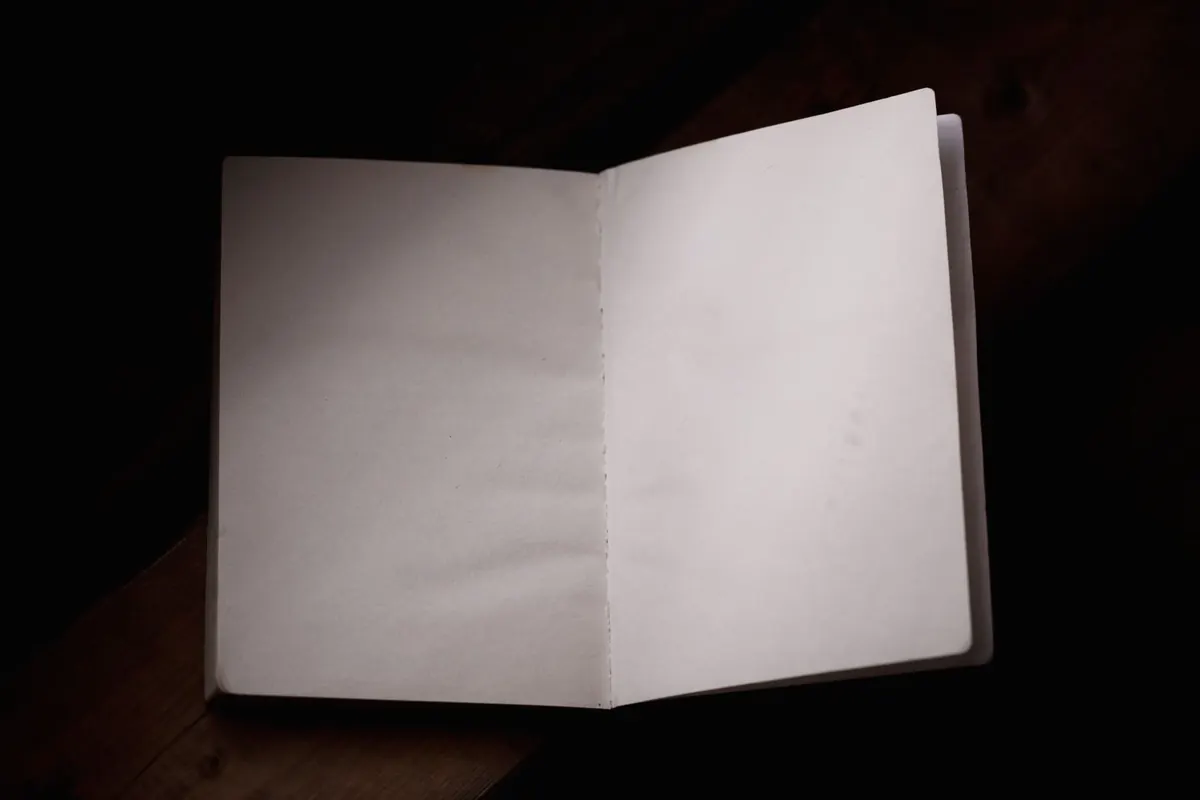


You are standing in a shop with a notebook in one hand and a pen in the other. The paper feels smooth, the cover is right, and the pen glides across the tester pad. So you buy both. Two days later the ink from page one has printed itself faintly onto page two, and your handwriting looks like it was caught in the rain. None of that is bad luck. It is untested paper meeting untested ink. Ten focused minutes — in the shop or at your own desk — will tell you more than the label, the weight, or the price ever will.
Paper Weight Is a Hint, Not a Promise
Every stationery aisle tempts you with numbers: 70 gsm, 90 gsm, 120 gsm. Heavier paper usually handles wetter ink better, and that is a reasonable starting point. But weight only tells you how much fibre sits under your nib, not how the surface has been treated. A lightly sized 100 gsm sheet can bleed more than a crisp 80 gsm sheet from a maker who knows what it is doing with coatings.
Texture matters too. Rough, toothy paper grabs ink and dries it quickly but can shred fine nibs. Very smooth, coated paper lets a fountain pen glide, then keeps the ink sitting on the surface for longer than you expect. Neither is better; they behave differently. The only way to know which suits the way you write is to put your own pen on it, at your own speed.
The Smudge Test: How Long Does the Ink Really Stay Wet?
Write one full sentence at normal speed, then wait. Count the seconds. Now drag the side of your hand across the line the way you would if you were writing the line beneath it. If the words smear into grey streaks, that is your answer — and it will happen on every page, not just the first.
The ten-second rub
For a quicker read, write a short word, wait ten seconds, and press your thumb onto it. Lift straight up. A clean lift means the ink has settled. A thumbprint in reverse means you will need to be careful with closed notebooks, folded pages and the inside of a bag.
The slow-writing trap
Most of us write faster on a tester pad than we do in a real entry at night. Slow down deliberately when you test, because slower writing lays down more ink and brings you closer to what happens when you are thinking through a long paragraph. Left-handed writers should test in their natural hand position too, since that is where smudging shows up first.
The Bleed Test: Turn the Page Over
Bleed is ink that has travelled all the way through the sheet. It is not a shadow; it is a stain with edges, sometimes a tiny dark spot at the centre of a dot, sometimes a whole mirrored word. Write a normal line, then turn the page and look at the back under good light.
I find it more useful to grade what I see than to decide pass or fail:
- None: the reverse is clean. Rare and lovely.
- Ghosting: you can see the shape of the writing, but no ink has crossed. Usually acceptable.
- Show-through: the lines are strongly visible and dark, though still flat. Workable for one-sided writing.
- Bleed: distinct spots or feathery edges on the reverse. Leave that notebook for a drier pen.
Then repeat with a highlighter. A wide chisel tip floods paper in a way a fine pen never will, and a notebook that survives a fountain pen can still give up under a marker. While you are there, run the highlighter over a dried line of ink: if the line smears, your page will look muddy every time you review your notes.
Ghosting Is Not Bleed, and the Difference Matters
People abandon good notebooks because they can see writing through the page. Often that is ghosting, not bleed, and it is a normal trade-off on thin paper designed to keep a journal light enough to carry. If you write on one side only, ghosting is mostly a cosmetic annoyance. If you use both sides, it becomes a legibility problem: two sets of handwriting competing for the same space.
Decide before you buy which of those readers you are. A four-hundred-page notebook that fits in a coat pocket has to be thin somewhere, and the maker chose see-through over bulk. Knowing that going in saves you from feeling cheated later.
How to Test in a Shop Without Causing a Scene
Most stationery shops expect a little testing — that is what the tester pads are for. A few habits keep it polite and useful:
- Bring the pen you actually write with. A tester ballpoint tells you almost nothing about your fountain pen.
- Ask before writing in a sealed or displayed notebook. Staff usually say yes to a small mark in a corner; almost none say yes to a full page.
- Test near the back, not the front, and keep it to a short line and one highlighter stroke.
- Check the gutter as well as the page. Writing close to the spine on a stiff binding is a different experience from writing in the middle.
- Photograph the result with your phone. Shop lighting flatters everything, and you will want to compare three candidates an hour later.
Build a Small Test Kit at Home
If you buy online, or you simply want a method you can repeat, keep a small kit together. It takes less space than a pencil case:
- Three or four pens you use most — a fine gel, a fountain pen, a fineliner, and a marker if you journal with one.
- One highlighter, ideally the widest tip you own.
- A scrap of every new paper you buy, kept in an envelope or clipped inside the notebook.
- A phone timer for the smudge count, and a short written note of the results.
When a new notebook arrives, spend two minutes on its last page: four short lines in four inks, one highlighter stripe, then flip it over. You will know exactly what that paper can take before you commit a single real entry to it.
Match the Result to the Job
A test only means something against a purpose. Thick coated paper that shrugs off markers is wonderful for a bullet journal and frustrating for a novel draft, where you want hundreds of pages and a bit of give. A thin, slightly toothy notebook that ghosts a little is perfect for pocket notes and hopeless for double-sided meeting notes in wet ink.
So write down what the notebook is for before you judge the test page, then ask one question: does this paper fail at that job, or does it show a small flaw that will not matter for how I will use it?
Two Minutes Before You Commit
None of this requires equipment or expertise. A pen, a corner of paper, ten seconds of patience and a look at the reverse side will tell you most of what you need to know. The next time a notebook tempts you, resist the urge to judge it by its cover and its weight. Write a line, drag your hand, turn the page. Buy the ones that pass, and leave the beautiful ones that do not — there will always be another.
Photo: Andy Barbour / Pexels